

In today’s hyperconnected world, children are exposed to screens earlier than ever before. From educational apps and cartoons to gaming and social media, digital engagement has become a constant presence in their lives.
While technology offers convenience and opportunities for learning, excessive screen exposure has quietly reshaped how children think, feel, and behave. Recent studies in child development and neuroscience show that extended screen time impacts not only physical health but also emotional intelligence, creativity, and cognitive growth.
As parents and educators, understanding these hidden effects—and learning how to reverse them—is critical to raising balanced, curious, and healthy young minds.
1. The Science Behind Screen Time and the Developing Brain
1.1 Brain Wiring and Cognitive Overload
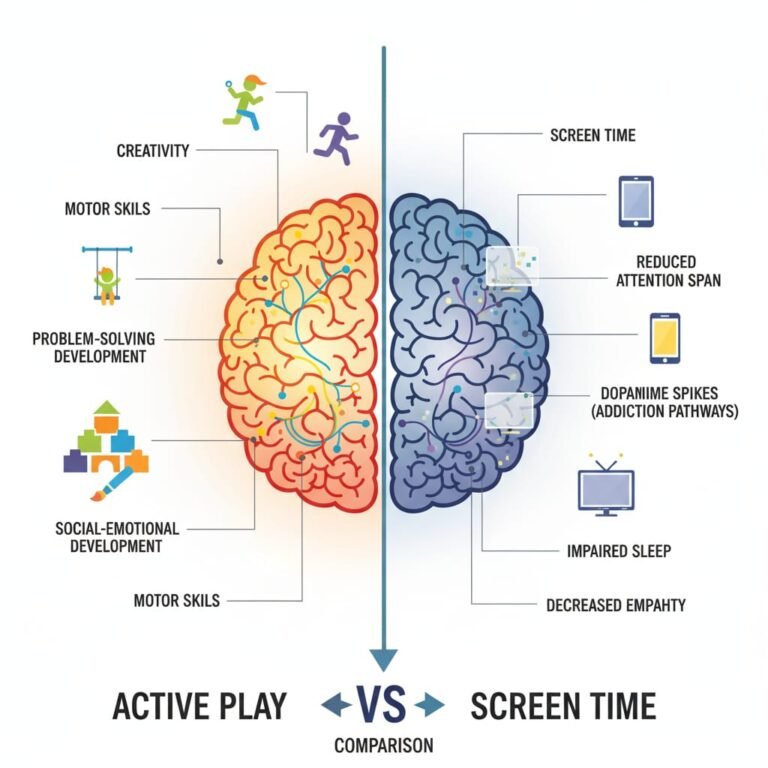
The first six years of life are when the brain’s neural connections form rapidly. During this period, hands-on play, face-to-face interaction, and physical exploration are vital for brain development.
When children spend too much time passively consuming digital content, the brain’s sensory integration process slows down. Instead of learning through touch, movement, and social cues, children become dependent on visual and auditory stimulation—limiting their ability to sustain attention and solve problems independently.
Research Insight:
A 2023 study from the American Academy of Pediatrics found that preschoolers who exceeded two hours of daily screen use showed measurable delays in language development and executive functioning compared to peers engaged in physical play.
2. Emotional and Behavioral Consequences
2.1 Reduced Emotional Regulation
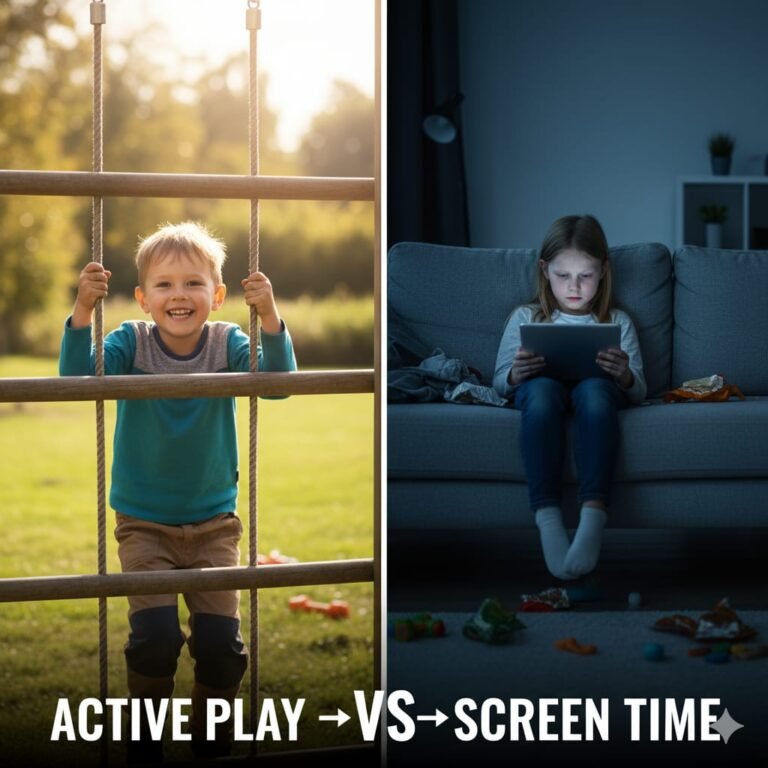
Children learn to regulate emotions through real-world experiences—playing, negotiating, sharing, and coping with disappointment. Excessive screen use short-circuits this process. Instant rewards from digital games or videos condition the brain to expect constant stimulation, making frustration or boredom harder to manage.
2.2 Attention and Impulse Control
Fast-paced digital content—like quick-cut YouTube videos or mobile games—trains the brain to expect rapid feedback. Over time, this pattern can lead to attention fragmentation and impulsive behaviors, similar to symptoms seen in mild ADHD.
Expert View:
Dr. Dimitri Christakis, a leading pediatric researcher, emphasizes that “what children watch and how they interact with media are as important as how much time they spend.” Quality and context matter as much as quantity.
3. Physical Health Implications
3.1 Vision and Posture Problems
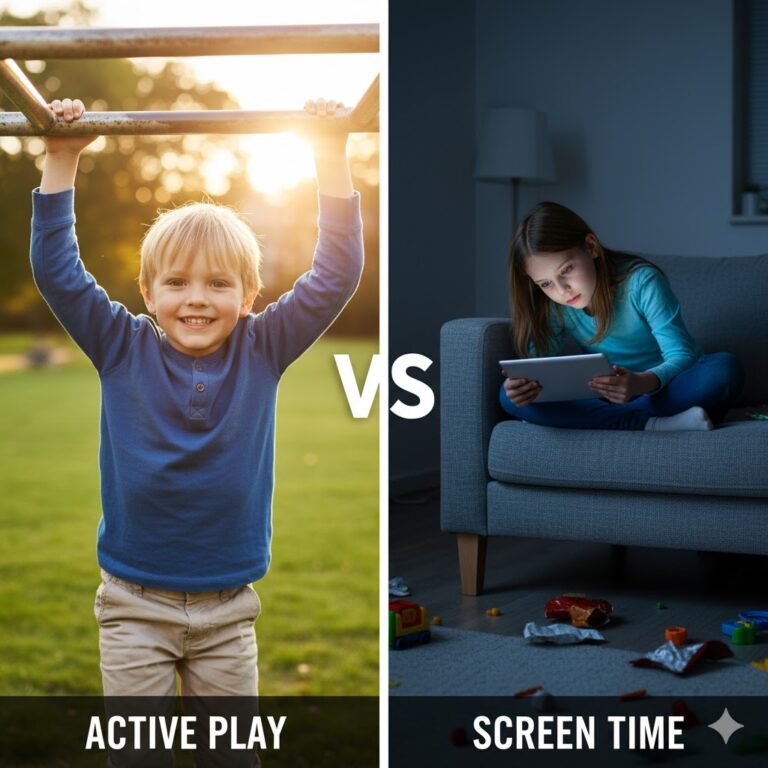
Blue light exposure, prolonged focus, and poor posture during screen use contribute to eye strain, headaches, and early myopia. The World Health Organization (WHO) now recommends no screen time for children under two years old and limited, high-quality use for ages 2–5
3.2 Sleep Disruption
Screens delay melatonin release, making it harder for children to fall asleep and reach deep rest stages. Poor sleep impacts mood, attention, and memory—essential elements for school success and emotional well-being.
4. Social Skills and Relationship Gaps

4.1 Decline in Empathy and Communication
Face-to-face play teaches children to interpret tone, expression, and body language. When digital interaction replaces human connection, empathy and perspective-taking skills diminish.
This can result in children struggling to form deep relationships or manage group dynamics later in school and social settings.
4.2 Family Detachment
Frequent digital use during family time reduces bonding moments. Children who regularly eat or relax with devices show lower emotional connection scores in developmental studies.
5. The Reversal Plan — How to Reduce and Replace Screen Time

5.1 Step 1: Create Digital Boundaries
Set screen-free zones: Keep devices out of bedrooms and dining areas.
Follow the 20-20-20 rule: For every 20 minutes of screen use, take a 20-second break to look at something 20 feet away.
Lead by example: Children imitate adult behavior; mindful screen use by parents encourages the same habit in kids.
5.2 Step 2: Replace Screens with Interactive Learning
Replacing doesn’t mean restricting—it means redirecting. When parents offer rich, engaging alternatives, children naturally shift toward creative and constructive play.
** Here are a few toy-based replacements from SmartKidsShopping.com that encourage learning through play:
🧩 1. Building Toys for Logical Thinking and Creativity
Transform distraction into discovery! Encourage your child to build, experiment, and imagine using Magnetic Building Tiles.
These open-ended sets promote spatial reasoning, engineering concepts, and teamwork—key skills for lifelong learning.
➡ Learn more in our in-depth guide:
👉 Building Toys: A Child Development Specialist’s Guide for Diamond Problem Solvers
🎨 2. Art and Craft Kits for Emotional Expression
For children who love colors and creativity, replace passive scrolling with active creation. Our Art & Craft Kits build focus and fine motor control while helping kids express feelings through design and color.
🔬 3. Science Kits that Spark Curiosity
Inspire your child to think like a scientist! STEM Experiment Kits encourage critical thinking and problem-solving through safe, hands-on experiments. Each activity stimulates curiosity and reinforces real-world learning.
🚗 4. Montessori Toys and Wooden Puzzles
Help your child slow down and concentrate with Montessori Wooden Puzzles.
These tactile toys teach patience, logic, and persistence—skills that balance the instant gratification children often get from screens.
✅ Parent Tip: Rotate toy sets weekly to keep playtime fresh and challenging. This prevents boredom, boosts focus, and helps children rediscover creativity every time.
6. Expert FAQ — What Parents Often Ask
Q1: How much screen time is OK for kids?
According to the American Academy of Pediatrics (AAP):
Under 18 months — Avoid all screens except video calls.
Ages 2–5 — 1 hour per day of high-quality content, co-viewed with parents.
Ages 6+ — Create a consistent media plan and balance it with sleep, school, and physical activity.
Q2: What happens if a child watches too much TV or mobile?
Excessive use can cause sleep problems, delayed speech, irritability, and attention issues. It may also lead to poor posture and reduced outdoor activity, affecting both physical and emotional health.
Q3: Can educational apps replace real learning?
No. While quality apps can support learning, hands-on play, storytelling, and physical exploration are irreplaceable for developing motor, sensory, and social skills.
Q4: How to stop kids from using phones too much?
Start by setting small limits and offering exciting alternatives. Encourage playtime with toys like STEM kits or art projects that naturally reduce screen interest.
Q5: Is screen time harmful for brain development?
Yes—especially in early childhood. Studies link heavy screen exposure to delays in attention, memory, and problem-solving, as well as emotional regulation issues.
Q6: How to make screen time educational?
Choose interactive, age-appropriate content and participate with your child. Apps that involve creativity, movement, or problem-solving are far better than passive video watching.
7. Nurturing a Healthy Digital Balance
7.1 Model Mindful Tech Habits
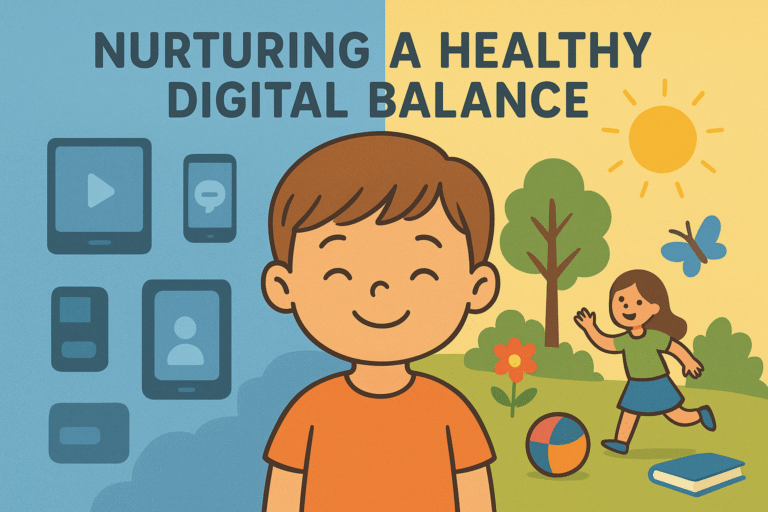
Parents who demonstrate balanced media use help children see screens as tools, not toys. Schedule family activities that don’t rely on technology—like reading together, cooking, or outdoor exploration.
7.2 Engage in Co-Viewing
When screen time is allowed, co-viewing or co-playing can turn passive media consumption into a shared learning experience. Ask questions like, “What do you think will happen next?” or “Why did that character make that choice?” to stimulate reflection.
7.3 Encourage Open Communication
Children should feel comfortable discussing what they watch or play online. Creating this openness builds trust and awareness about digital risks and media influence.
8. The Long-Term Benefits of Screen Time Reversal
Reducing screen time is not about deprivation—it’s about reintroducing balance and brain health. Within weeks of structured limits and hands-on activities, parents often notice:
Improved sleep patterns 😴
Better attention span 🧠
More creativity and independent thinking 🎨
Enhanced social and emotional connection 💬
Greater overall happiness and engagement 🌈
The earlier this balance begins, the stronger the foundation for lifelong learning and resilience.
9. Ready to Help Your Child Thrive Without Screens?
It’s time to turn awareness into action.
Every moment spent away from screens is a chance for your child to build, explore, and imagine. Whether through STEM, art, or Montessori play, each toy you choose is a step toward healthier development.
👉 Shop our Screen-Free Learning Collection
🛒 Explore SmartKidsShopping.com — Toys That Build Brains, Not Screens!
✨ Internal Learning Resource
Want to dive deeper into how play builds powerful problem-solving skills?
📖 Read next: Building Toys: A Child Development Specialist’s Guide for Diamond Problem Solvers
10. Expert Summary: A Holistic Approach
Key Takeaway:
Technology is not the enemy—uncontrolled use is. The real challenge lies in helping children use digital tools purposefully while keeping real-world exploration at the core of learning.
When we replace passive screen time with meaningful play, creativity, and family interaction, we don’t just protect childhood—we enrich it.
As child development specialists agree, the goal is not to remove technology, but to reclaim childhood through mindful, balanced engagement.